

- Haber Akışı
- KEŞFEDIN
- Sayfalar
- Etkinlikler
- Bloglar
-
 Hakkımızda
Better EEG Spike Detection Starts With the Right Tools and Training
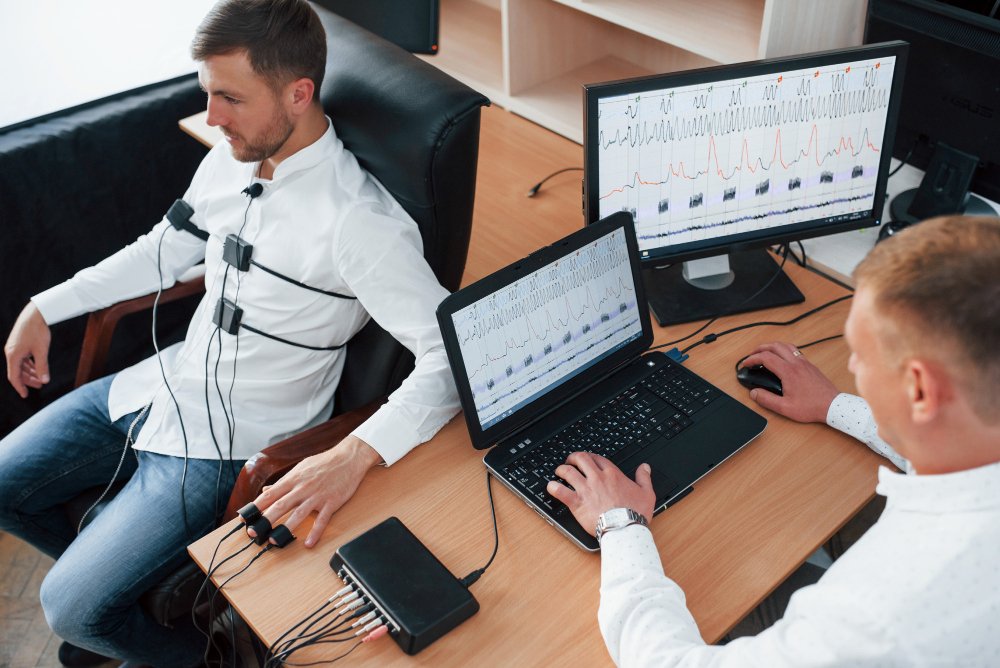
Ask any neurologist who regularly reads EEGs what the hardest part of the job is, and there's a good chance the answer involves epileptiform spike identification. Not because the concept is unclear — everyone knows what a spike looks like in theory — but because the gap between textbook examples and real-world recordings is wide enough to catch even experienced readers off guard.
EEG spike detection is one of those clinical skills where the learning curve never quite flattens. There's always a recording that makes you second-guess yourself. Always a waveform that sits right on the boundary between significant and benign. Always a patient whose clinical context changes how you interpret what you're seeing in the signal.
This post is written for neurologists, clinical neurophysiologists, EEG technologists, and neuroscience researchers who want a deeper look at what's happening in the field — the tools that are improving, the challenges that persist, and the practices that genuinely move the needle on detection accuracy.
The Foundation: Understanding What You're Looking For
Before getting into detection methodology and technology, it's worth grounding the conversation in what EEG spike detection actually involves at a clinical level.
An epileptiform spike is characterized by its duration — typically 20 to 70 milliseconds — its sharp morphology, its amplitude relative to the background, and its distinctive after-coming slow wave. These features distinguish it from normal sharp transients, though as anyone who has read thousands of EEGs knows, the distinction isn't always clean.
The clinical significance of detected spikes depends heavily on their location, distribution, morphology, and the patient's clinical context. A single spike in a sleep EEG may be essentially meaningless in one patient and highly significant in another. Focal spikes in the temporal lobe carry different implications than generalized spike-wave complexes. Interpreting EEG spike detection findings correctly requires integrating the electrographic findings with everything else you know about the patient.
This is the core reason why automated detection tools, however sophisticated, are designed to support rather than replace clinical judgment. The algorithm can find the candidate events. Only the clinician can interpret what those events mean for this specific patient.
Why Manual Review Alone Is No Longer Sufficient
There's a growing mismatch in clinical neurophysiology between the volume of EEG data being generated and the human resources available to review it thoroughly.
Long-term EEG monitoring has expanded significantly across US epilepsy centers and critical care units over the past decade. Continuous EEG monitoring in the ICU, ambulatory recordings that run for 72 hours or more, video-EEG studies that capture multiple events — these are generating data volumes that would require impractical amounts of reviewer time to process manually with the kind of attention the recordings deserve.
The response to this challenge has been the development and adoption of automated EEG spike detection tools that can rapidly scan long recordings, identify candidate events, and present them to the reviewer in a prioritized, organized format. The reviewer's time is spent on interpretation rather than on manual scanning through hours of unremarkable background activity.
This workflow shift doesn't just improve efficiency — it can actually improve accuracy. Human attention has real limits. A reviewer who has been scanning EEG for two hours is more likely to miss a subtle spike than one who is reviewing a curated set of algorithmically flagged candidate events. Automated pre-screening concentrates human review where it's most needed.
Evaluating Automated Detection: What the Numbers Actually Mean
When vendors or research groups report performance metrics for automated EEG spike detection systems, the numbers require some interpretation to be clinically meaningful.
Sensitivity — the percentage of true spikes that the algorithm correctly identifies — is the most commonly reported metric. High sensitivity is important, but it's only half the picture. A system with 95% sensitivity but a false positive rate that generates hundreds of spurious flags per hour of recording doesn't actually reduce reviewer burden — it shifts the work from scanning for real events to sorting through noise.
Specificity and positive predictive value matter equally. The practical question is: when the algorithm flags an event, how often is it actually a spike? Systems that achieve a high positive predictive value at a clinically useful sensitivity threshold are the ones that actually improve workflow.
The best eeg software for clinical use provides transparent performance metrics across different patient populations and recording conditions — not just aggregate numbers from a favorable validation dataset. When evaluating tools for your specific setting, look for performance data on patients similar to yours, and if possible, run a prospective evaluation in your own lab before committing to full implementation.
Machine Learning Approaches and Their Limitations
Modern automated EEG spike detection systems are predominantly built on machine learning foundations — from traditional support vector machine approaches to convolutional neural networks and more recent deep learning architectures. Understanding the basic logic of how these systems work helps clinicians use them more intelligently and recognize their failure modes.
Machine learning models learn to identify spikes by training on large datasets of annotated EEG recordings — recordings where human experts have marked which events are epileptiform and which aren't. The algorithm learns to recognize the features that distinguish the annotated spikes from non-spike events.
The limitation this creates is straightforward: the algorithm performs best on data that resembles its training set. If your patient population, your recording equipment, or your electrode configurations differ substantially from the training data, performance can degrade in ways that aren't always obvious until you're looking at specific cases.
This is why clinical validation in your specific setting is important before full deployment, and why ongoing monitoring of detection performance — comparing algorithmic flags to final clinical interpretations over time — is good practice even after implementation.
The Collaborative Research Ecosystem
For researchers working on EEG spike detection, the last several years have seen meaningful growth in collaborative infrastructure that supports better science.
Open-access annotated EEG datasets have improved the quality and diversity of training data available to algorithm developers. Standardized evaluation frameworks have made it easier to compare performance across systems on common benchmarks. And computational neuroscience platforms have lowered the barrier to applying sophisticated analytical approaches for researchers who aren't primarily data scientists.
Neuromatch represents the kind of community-driven, computationally focused infrastructure that the neuroscience research community has been building — creating environments where researchers with diverse backgrounds can engage with advanced analytical tools and connect with colleagues working on related problems. For groups working on EEG analysis and detection methodology, these platforms offer both resources and community that accelerate the work.
The broader open science movement has also been valuable for this field. When researchers share their methodologies, their code, and their data, the whole field benefits — detection algorithms improve faster, failure modes get identified and addressed, and clinical translation happens more reliably.
Practical Workflow Integration in US Neurology Practices
Bringing better EEG spike detection into a US neurology practice or epilepsy center involves more than selecting software. It involves rethinking how EEG review is structured and how automated tools fit into that structure.
The most effective implementations treat automated detection not as a replacement for reviewer judgment but as the first pass in a two-stage review process. The algorithm scans the full recording and creates a structured list of candidate events, ranked by confidence. The reviewer works through this list, accepting or rejecting each candidate, and also scans through the full recording at a higher playback speed to catch anything the algorithm may have missed.
This workflow takes advantage of what each component does best. The algorithm processes volume without fatigue. The reviewer brings clinical context, pattern recognition that accounts for the full recording, and the judgment to integrate electrographic findings with patient history.
Building this workflow effectively requires attention to the human factors — training staff on how to use the detection tool, establishing clear protocols for how algorithmic flags are documented and communicated, and defining quality assurance processes that catch cases where the algorithm's performance is degrading.
Documentation, Coding, and the Regulatory Dimension
In US clinical settings, EEG reporting has documentation and coding implications that automated detection tools affect in practical ways. When a spike is identified and reported, the documentation needs to accurately reflect both the electrographic finding and its clinical interpretation.
Automated detection tools that integrate with EEG reporting workflows can streamline this documentation process, linking detected events to report sections and supporting the kind of detailed, structured reporting that high-quality epilepsy care requires. Some systems also support the documentation trail needed for medical record accuracy, quality improvement monitoring, and research data extraction.
From a regulatory standpoint, FDA-cleared automated EEG analysis tools in the US are classified as clinical decision support tools — their outputs are intended to inform, not to determine, clinical decisions. Understanding this classification helps clinicians think correctly about how to integrate automated detection into their practice: it's a tool that informs their judgment, not one that substitutes for it.
Building Expertise Alongside Technology
One of the most important things the US neurology community can do to improve EEG spike detection outcomes is to invest in the human expertise side of the equation alongside the technology.
This means fellowship and residency programs that provide genuinely rigorous EEG training — not just enough to pass boards, but the kind of deep exposure to diverse recordings that builds real pattern recognition. It means continuing education that keeps practicing neurologists current on both the evolving EEG literature and the changing technology landscape. And it means creating institutional cultures where EEG reading is valued as a specialized skill that deserves dedicated time and attention rather than something to fit in between other tasks.
The technology is improving, and that's genuinely exciting. But the neurologists and technologists who bring deep interpretive skill to that technology are the ones who get the best patient outcomes from it.
Final Thoughts
EEG spike detection is hard, important, and getting better — both because of advances in detection technology and because of growing investment in the research and educational infrastructure that supports the field. For US clinicians and researchers working in this space, the opportunity is to engage with that progress deliberately: adopt tools that genuinely improve your workflow, build the expertise to use them well, and contribute to the collaborative community that's driving the science forward.
If you're ready to improve your EEG spike detection workflow and outcomes, explore the tools and training resources available today — your patients depend on the quality of what you're doing.
