

- Haber Akışı
- KEŞFEDIN
- Sayfalar
- Etkinlikler
- Bloglar
-
 Hakkımızda
Tenant Improvement Allowances in Iowa: How to Negotiate and What to Expect
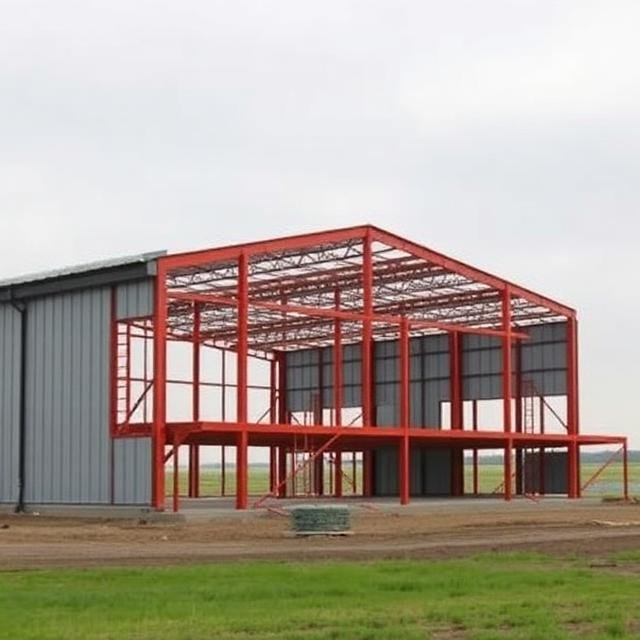
Tenant improvements in Iowa commercial leases are one of the most negotiable — and most misunderstood — parts of the entire leasing process. If you're signing a commercial lease in Des Moines, Ankeny, West Des Moines, or anywhere in Central Iowa, understanding how tenant improvement allowances work before you sit down at the negotiating table can save you tens of thousands of dollars and months of frustration.
The short version: a tenant improvement (TI) allowance is money the landlord agrees to put toward building out your space. But what that number actually covers, how it gets paid, and what happens when your buildout costs more than the allowance — those details live in the lease language, and most tenants don't read them carefully enough until it's too late.
I'll walk you through exactly how TI allowances work in the Iowa market, what current numbers look like, how to negotiate effectively, and what mistakes to avoid.
What a Tenant Improvement Allowance Actually Is
A tenant improvement allowance is a landlord-funded credit — typically expressed as a dollar amount per square foot — that covers some or all of the cost of building out a commercial space to fit a tenant's needs.
It sounds simple. In practice, it's one of the most variable terms in any commercial lease.
The allowance might cover:
- Demolition of existing walls and finishes
- New framing, drywall, and ceiling systems
- HVAC distribution and controls
- Electrical panels, outlets, and lighting
- Plumbing rough-in for break rooms or restrooms
- Flooring and paint
- Doors and hardware
Or it might cover only a subset of those items. Some landlords define TI allowances broadly. Others restrict what the money can be spent on — excluding things like furniture, signage, technology infrastructure, or owner-furnished equipment. Reading the definition section of your lease carefully is not optional.
How TI Allowances Work in the Iowa Commercial Market
The Iowa commercial real estate market — particularly in the Des Moines metro — operates a bit differently from gateway cities like Chicago or Kansas City. The market is relationship-driven, landlords tend to have longer-term outlooks, and there's more room to negotiate than in high-demand coastal markets.
That said, TI allowances in Central Iowa are not unlimited, and they've tightened in recent years as construction costs have risen. What landlords offered in 2019 looks different from what they're offering now.
Current TI Allowance Ranges in Des Moines and Surrounding Markets
Here's a realistic picture of current TI allowance ranges by space type across the Des Moines metro:
| Space Type | Typical TI Allowance Range | Notes |
|---|---|---|
| Class A Office | $45 – $80/sq ft | Higher end for long-term leases in newer buildings |
| Class B Office | $25 – $55/sq ft | More variable depending on building age |
| Retail (vanilla box) | $20 – $45/sq ft | Lower — landlord already provides basic shell |
| Restaurant (shell space) | $30 – $60/sq ft | Often supplemented by tenant's own capital |
| Industrial / Flex | $10 – $35/sq ft | Office portion only in many cases |
| Medical Office | $50 – $100/sq ft | Reflects higher MEP and plumbing requirements |
These are starting points, not ceilings. Strong tenants with long lease terms and good credit regularly negotiate above these ranges — especially in a market where landlords are competing for quality tenants.
How Allowances Are Structured in Lease Agreements
TI allowances are typically structured in one of three ways:
1. Landlord-managed buildout — The landlord controls the construction process, hires the contractor, and delivers a finished space. The tenant has input on design but limited control over cost or contractor selection.
2. Tenant-managed buildout with reimbursement — The tenant manages the construction and gets reimbursed up to the allowance amount after work is complete and documentation is submitted. This gives the tenant more control but requires upfront capital.
3. Rent credit in lieu of buildout — Some landlords offer rent-free periods instead of or in addition to a TI allowance. This works well for tenants whose buildout costs are below the allowance or who want to phase their improvements.
Each structure has implications for cash flow, contractor selection, timeline, and what happens when costs run over. Know which structure your lease uses — and which one works best for your situation — before you sign.
What Drives TI Allowance Amounts in Iowa
Understanding what landlords factor into their TI offers helps you negotiate more effectively.
Lease Length
This is the single biggest driver. A three-year lease will almost never receive the same TI allowance as a seven or ten-year lease. Landlords are amortizing their buildout investment over the lease term — shorter lease means less time to recover the investment.
If your space needs significant buildout work, pushing for a longer initial term (with renewal options to preserve flexibility) is usually worth it. A five or seven-year lease with solid renewal options gives you negotiating leverage while giving the landlord the security to invest more upfront.
Tenant Credit Quality
Landlords offer higher allowances to tenants with strong financials. If you're an established business with good credit and a track record, make sure that's visible in your lease negotiation. Provide financial statements or references proactively — don't make the landlord ask.
Startup businesses or new entities may need to offer personal guarantees, larger security deposits, or longer lease terms to offset the landlord's perceived risk and unlock better allowance terms.
Condition of the Existing Space
A space that's already partially built out — with functional HVAC, reasonable electrical, and existing walls — requires less investment than raw shell space. Landlords factor this in. If you're taking a space that already has 60% of what you need, the allowance conversation starts from a different place than a cold dark shell.
Market Conditions in the Specific Submarket
The Waukee and Ankeny office markets behave differently from Downtown Des Moines or West Des Moines. Supply and demand in a specific submarket affects how much leverage you have. In areas where vacancy is low and landlords have multiple prospects, TI offers tend to be leaner. In higher-vacancy submarkets, landlords compete for good tenants with more generous packages.
How to Negotiate a TI Allowance Effectively
This is where preparation makes the difference. Tenants who walk into TI negotiations without a real construction cost estimate are negotiating blind — and they almost always leave money on the table.
Get a Construction Cost Estimate Before You Negotiate
The most important thing you can do before signing a lease is get a real number from a contractor for what your buildout will actually cost. Not a rough guess. A preliminary estimate based on your actual space and program.
This does two things. First, it tells you whether the landlord's offer is adequate or whether there's a gap you need to close in the lease negotiation. Second, it gives you a credible, documented basis for asking for more — which is far more effective than simply saying "we need a higher allowance."
The team at Happe Commercial regularly provides preliminary cost estimates for tenants who are still in lease negotiations — before any construction commitment is made. It's one of the highest-value conversations you can have early in the process.
Understand What's Included (and What's Not)
Before you negotiate the dollar amount, negotiate the definition. Make sure your lease specifies clearly:
→ What categories of work are eligible for reimbursement → Whether furniture, fixtures, technology, or signage are included or excluded → Who selects and manages the contractor → What documentation is required for reimbursement → What the timeline is for reimbursement after work is complete
A $60/sq ft allowance that excludes half the work you need done is worth less than a $45/sq ft allowance with a broader definition.
Ask for an Above-Standard Allowance With Justification
If your preliminary construction estimate shows that your buildout will cost $85/sq ft and the landlord's initial offer is $50/sq ft, don't just ask for more money. Bring the estimate. Walk the landlord through the scope. Show them why your space requires the investment you're asking them to make.
Landlords respond better to evidence than to negotiating posture. A well-prepared tenant with a real cost breakdown is taken more seriously than one who's simply pushing back without a basis.
Consider Negotiating a Rent Reduction as an Alternative
If the landlord won't increase the TI allowance, ask whether they'll reduce the base rent for the first two or three years instead. For a tenant who's covering overage out of pocket, reduced rent in the early years can offset the difference and improve cash flow during the buildout and lease-up period.
What Happens When Buildout Costs Exceed the Allowance
This is the scenario that catches the most tenants off guard — and it happens regularly in the current Iowa construction market, where costs have risen faster than TI allowances have kept pace.
When your buildout costs more than the allowance, you have a few options:
a) Pay the overage out of pocket — The most common outcome. Make sure you've budgeted for this possibility before you sign.
b) Negotiate the overage into the lease rate — Some landlords will fund the gap and amortize it into slightly higher rent over the lease term. This keeps your upfront cash requirement lower but increases your monthly occupancy cost.
c) Phase your improvements — Do the work that the allowance covers now and plan additional improvements for a later phase when you have capital available. This requires designing with phases in mind from the beginning.
d) Value engineer the scope — Work with your contractor to find ways to achieve your program at lower cost. This might mean adjusting finishes, phasing certain systems, or finding efficiencies in the design. A knowledgeable contractor can often find 10 to 15% in savings without materially changing the outcome.
Getting a realistic construction cost estimate early — before you sign — is what keeps you out of the unpleasant situation of discovering a $40/sq ft gap after the ink is dry.
💬 A Pattern I See Repeatedly
"The tenants who end up in trouble aren't the ones who negotiate hard — it's the ones who sign first and ask questions later. I've talked with business owners who committed to a space based on a landlord's description of 'move-in ready' only to discover that the HVAC was end-of-life, the electrical needed an upgrade, and their actual buildout was going to cost twice what they expected. Getting a contractor walkthrough before you sign a lease takes a few hours and can save you a very expensive lesson."
Pros and Cons of Different TI Allowance Structures
Landlord-Managed Buildout
✔ Pro: You don't need to manage the construction process or front capital ✔ Pro: Landlord assumes cost risk up to the allowance amount ✔ Con: You have limited control over contractor selection and construction quality ✔ Con: Landlord's cost priorities may not align with your design priorities
Tenant-Managed Buildout With Reimbursement
✔ Pro: You control contractor selection and construction quality ✔ Pro: You can choose a contractor you trust and have worked with before ✔ Con: You need to front the capital before reimbursement, which affects cash flow ✔ Con: Documentation requirements for reimbursement can be administratively demanding
Rent Credit Structure
✔ Pro: No construction management burden if you're doing minimal work ✔ Pro: Effective for tenants whose buildout costs fall below the allowance ✔ Con: Doesn't help tenants who need significant capital for buildout work ✔ Con: May result in a less customized space if you can't access the full buildout value
How to Protect Yourself Through the Buildout Process
Once the lease is signed and construction begins, a few practices protect you from cost overruns and timeline problems.
- Get a fixed-price or GMP contract from your contractor — a guaranteed maximum price contract puts a ceiling on your exposure and gives you cost certainty before work starts.
- Establish a clear change order approval process — any scope change during construction should require written approval and a written cost impact before work proceeds. Verbal approvals lead to disputed invoices.
- Confirm permit timelines with the city before you set an occupancy date — in Des Moines, Ankeny, West Des Moines, and Waukee, permit review timelines vary. Don't promise your team or customers a move-in date until you have a permit in hand.
- Document existing conditions before construction starts — photograph everything before demolition begins. If there's a dispute later about pre-existing damage, photos protect you.
For a broader look at what realistic commercial buildout timelines look like in the Des Moines area, our breakdown of commercial renovation timelines in Des Moines covers what to expect from start to finish.
Common TI Negotiation Mistakes Iowa Tenants Make
- Accepting the landlord's first offer without a counter — TI allowances are almost always negotiable, especially for long-term leases
- Not getting a contractor estimate before signing — this is the single most preventable source of budget problems
- Ignoring the definition of eligible costs — the dollar amount matters, but so does what it covers
- Choosing a contractor based on the lowest bid rather than experience and reliability
- Skipping the pre-construction site walkthrough — what you see in a vacant space isn't always what you get once walls come down
- Not budgeting for overage — even well-managed projects have unexpected costs; budget a 10 to 15% contingency above the allowance
Ready to Get a Real Cost Estimate Before Your Lease Negotiation?
If you're in lease negotiations or evaluating a commercial space in Des Moines, Ankeny, West Des Moines, Waukee, or anywhere in Central Iowa, a preliminary construction cost estimate is the best tool you have at the negotiating table.
Happe Commercial works with tenants at the pre-lease stage to provide realistic buildout estimates — so you know what you're actually working with before you commit to a space. There's no pressure and no obligation. Just a clearer picture of your real costs before the lease is signed.
Frequently Asked Questions
What is a tenant improvement allowance in a commercial lease? A tenant improvement allowance is a landlord-funded credit, expressed as dollars per square foot, that covers some or all of the cost of building out a leased commercial space to fit the tenant's needs.
What is a typical TI allowance for office space in Des Moines? Current TI allowances for office space in Des Moines range from $25 to $80 per square foot depending on building class, lease length, and the tenant's credit quality.
Can I negotiate a higher TI allowance than what the landlord initially offers? Yes — TI allowances are almost always negotiable, and tenants who bring a documented construction cost estimate to the negotiation regularly secure higher allowances than those who negotiate without data.
What happens if my buildout costs more than the TI allowance? The overage is typically the tenant's responsibility; options include paying out of pocket, negotiating the gap into the lease rate, phasing improvements, or value engineering the scope to reduce costs.
Who manages the construction when a TI allowance is involved? Depending on the lease structure, either the landlord manages construction and delivers a finished space, or the tenant manages construction and gets reimbursed up to the allowance amount after submitting documentation.
How long does a typical tenant improvement buildout take in Iowa? Depending on scope, most commercial tenant improvement projects in Central Iowa take six to sixteen weeks from permit issuance to completion, with simpler office refreshes on the shorter end and full gut renovations on the longer end.
Does a longer lease term result in a higher TI allowance? Generally yes — landlords amortize their TI investment over the lease term, so longer initial lease terms almost always produce higher allowance offers than shorter-term leases for the same space.
