

- Haber Akışı
- KEŞFEDIN
- Sayfalar
- Etkinlikler
- Bloglar
-
 Hakkımızda
Computer Vision Application Development Services for Automation
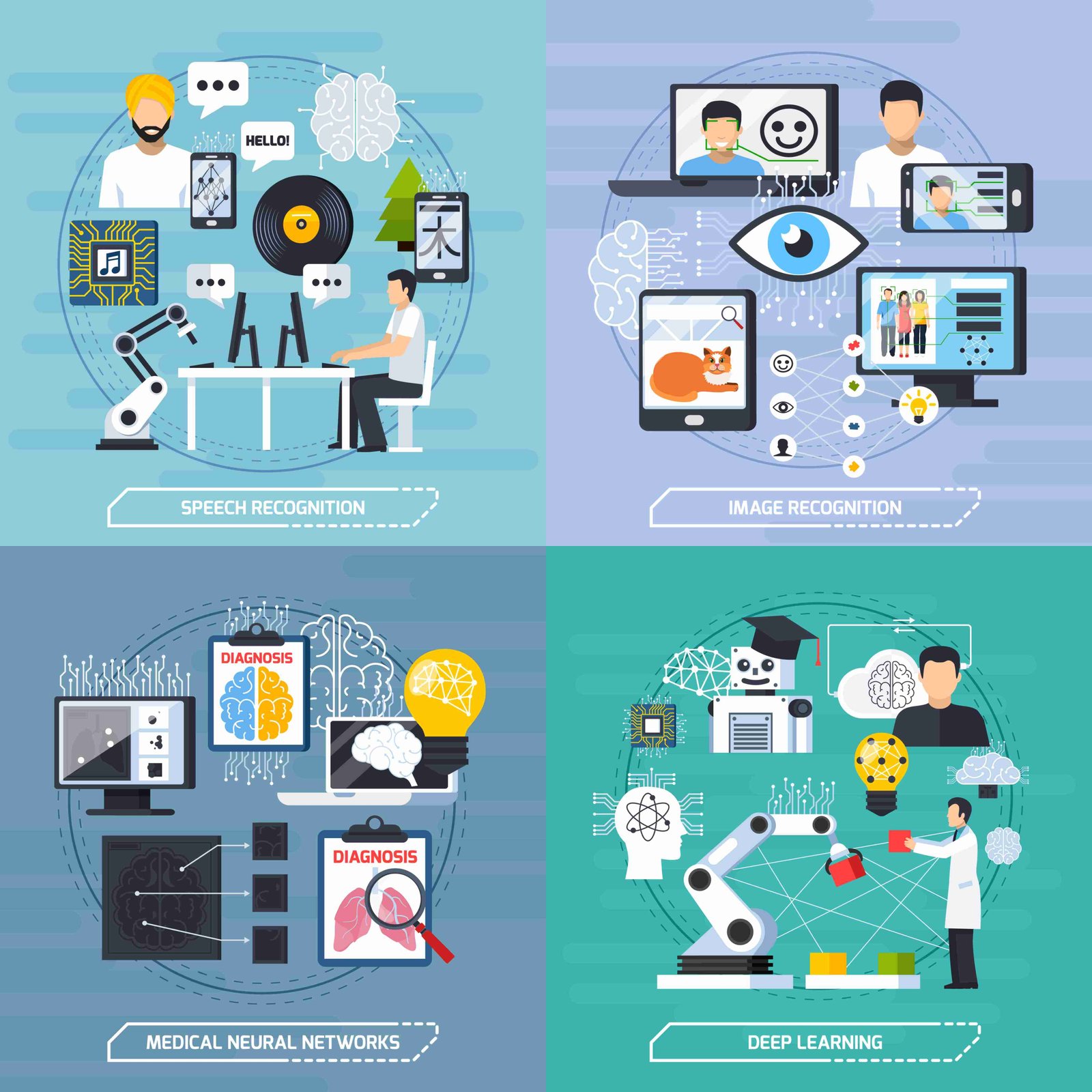
The ability of machines to interpret and understand visual information has evolved from science fiction to business reality, transforming industries and enabling automation capabilities that were unimaginable just a decade ago. Computer vision software development services are now essential components of digital transformation strategies across manufacturing, retail, healthcare, security, and countless other sectors.
The Computer Vision Revolution
Human vision processes approximately 10 million bits of information per second, enabling us to navigate complex environments, recognize objects and faces, read text, and interpret visual scenes effortlessly. Replicating this capability in machines has been one of artificial intelligence's most challenging frontiers, but recent advances in deep learning and neural networks have created breakthrough capabilities.
Today's computer vision systems can detect objects with superhuman accuracy, recognize thousands of different entities, analyze video streams in real-time, and extract insights from visual data at scales impossible for human analysts. These capabilities are transforming business operations, enabling new product categories, and fundamentally changing how organizations interact with their physical environments.
Core Computer Vision Technologies
Image Classification and Object Detection
At the foundation of computer vision lies the ability to classify images into categories and detect specific objects within visual scenes. Modern deep learning models, particularly convolutional neural networks (CNNs), achieve remarkable accuracy in identifying objects, animals, vehicles, products, and countless other entities within images and video streams.
Object detection goes beyond simple classification to localize objects within images, drawing bounding boxes around detected entities and identifying multiple objects simultaneously. These capabilities enable applications ranging from autonomous vehicles that must detect pedestrians, vehicles, and obstacles to retail analytics systems that track customer behavior in stores.
Image Segmentation
While object detection identifies what's in an image and approximately where, semantic segmentation precisely delineates object boundaries at the pixel level. This technique assigns class labels to every pixel, creating detailed understanding of scene composition.
Instance segmentation further distinguishes between individual instances of the same class, enabling systems to identify and separately analyze multiple people, vehicles, or products in a single image. These capabilities are critical for applications like medical imaging where precise boundary delineation determines diagnostic accuracy.
Facial Recognition and Biometric Analysis
Computer vision software development services include sophisticated facial recognition systems that identify individuals, estimate age and emotion, and analyze biometric characteristics. These systems power security applications, personalized customer experiences, and access control solutions.
Beyond simple recognition, modern systems analysis facial expressions to infer emotional states, attention levels, and engagement—capabilities valuable for customer experience analysis, driver monitoring, and human-computer interaction.
Optical Character Recognition (OCR)
Advanced OCR systems extract text from images with high accuracy across multiple languages, fonts, and document types. Modern approaches combine traditional image processing techniques with deep learning to handle challenging scenarios including handwritten text, degraded documents, and text in natural scenes.
These capabilities enable automated document processing, license plate recognition, receipt digitization, and countless other applications that bridge physical and digital information.
Video Analysis and Action Recognition
Analyzing video streams requires understanding not just what objects are present but how they move and interact over time. Video analysis systems track objects across frames, recognize actions and behaviors, detect anomalies, and generate high-level scene understanding.
These capabilities power surveillance systems that detect suspicious behaviors, sports analytics that track player movements, and retail systems that analyze customer journeys through physical spaces.
Industry Applications and Use Cases
Manufacturing and Quality Control
Computer vision software development services transform manufacturing quality control by automatically inspecting products for defects at speeds and accuracy levels impossible for human inspectors. Vision systems detect surface imperfections, dimensional variations, assembly errors, and component presence across production lines processing thousands of items per hour.
These systems reduce defect rates, decrease inspection costs, and provide detailed quality analytics that inform process improvements. Advanced applications include guided assembly systems that provide real-time worker assistance and robotic systems that handle complex manipulation tasks.
Retail and Consumer Analytics
Retailers deploy computer vision to analyze customer behavior, optimize store layouts, prevent theft, and enable frictionless checkout experiences. Systems track customer movements, measure engagement with displays, analyze demographic characteristics, and detect suspicious activities.
Automated checkout systems use computer vision to identify products without barcodes, enabling grab-and-go shopping experiences. Inventory monitoring systems detect out-of-stock conditions and track product placement compliance.
Healthcare and Medical Imaging
Medical imaging analysis represents one of computer vision's most impactful applications. AI systems assist radiologists in detecting tumors, identifying fractures, measuring organ volumes, and diagnosing diseases from X-rays, MRIs, CT scans, and other imaging modalities.
These systems achieve accuracy comparable to or exceeding human experts while processing images faster and more consistently. They augment rather than replace human expertise, highlighting potential issues for radiologist review and enabling earlier disease detection.
Agriculture and Precision Farming
Computer vision software development services enable precision agriculture applications including crop health monitoring through drone imagery, weed detection for targeted herbicide application, fruit ripeness assessment for harvest optimization, and livestock monitoring for health and behavior analysis.
These systems help farmers maximize yields while minimizing resource usage and environmental impact.
Security and Surveillance
Advanced video analytics transform passive surveillance systems into proactive security solutions. Computer vision analyzes video feeds to detect intrusions, recognize license plates, identify suspicious behaviors, track individuals across camera networks, and alert security personnel to potential threats.
These systems process vast amounts of video data to surface relevant events, making security operations more efficient and effective.
Autonomous Vehicles
Self-driving vehicles represent perhaps the most demanding computer vision application , requiring real-time detection and tracking of pedestrians, vehicles, traffic signals, lane markings, and obstacles across diverse environmental conditions.
These systems must achieve extraordinarily high accuracy and reliability, as mistakes can be catastrophic. Autonomous vehicle development continues advancing through improved sensors, more sophisticated algorithms, and massive training datasets.
Development Methodology
Requirements Analysis and Use Case Definition
Successful computer vision projects begin with clear problem definition. Computer vision software development services providers work with clients to understand business objectives, define success criteria, identify constraints around accuracy, latency, and cost, and assess data availability.
This phase establishes realistic expectations and guides technical decisions throughout development.
Data Collection and Annotation
Computer vision models learn from examples, requiring large datasets of labeled images or videos. Data collection involves gathering representative visual data, ensuring diversity across expected operating conditions, and balancing dataset composition to avoid biased models.
Annotation—labeling images with ground truth information—represents a significant effort. Advanced projects might require thousands or millions of labeled images, each carefully annotated by human experts. Efficient annotation strategies and quality control processes are critical for success.
Model Selection and Architecture Design
Different computer vision tasks require different model architectures. Image classification might use ResNet or EfficientNet architectures, while object detection could leverage YOLO, Faster R-CNN, or RetinaNet. Segmentation tasks might use U-Net or Mask R-CNN.
Selecting appropriate architectures requires understanding the trade-offs between accuracy, computational requirements, and inference speed. Edge deployment with limited computing resources demands different choices than cloud-based processing.
Training and Optimization
Model training involves feeding annotated data through neural networks, iteratively adjusting parameters to minimize prediction errors. This computationally intensive process requires specialized hardware (typically GPUs) and careful hyperparameter tuning.
Optimization techniques including transfer learning, data augmentation, and ensemble methods improve accuracy and generalization. Rigorous validation using holdout datasets ensures models perform well on unseen data.
Deployment and Integration
Computer vision software development services include deploying trained models into production environments, integrating with existing systems and workflows, optimizing for real-time performance, and establishing monitoring to detect degradation.
Deployment might target edge devices, cloud platforms, or hybrid architectures depending on latency requirements, privacy considerations, and infrastructure constraints.
Addressing Key Challenges
Computational Requirements
Computer vision models, especially deep learning approaches, require significant computational resources for both training and inference. Organizations must balance accuracy requirements against available computing budget and latency constraints.
Techniques like model compression, quantization, and neural architecture search help optimize models for resource-constrained environments without sacrificing too much accuracy.
Data Quality and Availability
Limited training data represents a common challenge. Organizations might not have sufficient labeled examples, or available data might not represent the diversity of real-world conditions. Addressing these gaps requires creative approaches including synthetic data generation, transfer learning from pre-trained models, and active learning strategies that maximize information from limited labels.
Robustness and Generalization
Models that perform well on training data sometimes struggle with real-world scenarios not represented in training sets. Changes in lighting, weather, camera angles, or object appearances can degrade performance. Building robust systems requires carefully designed training data, appropriate data augmentation, and extensive testing across diverse conditions.
Explainability and Trust
Deep learning models operate as "black boxes," making it difficult to understand why they make specific predictions. For high-stakes applications like medical diagnosis or security, explainability is essential for user trust and regulatory compliance. Techniques like saliency maps and attention visualization help illuminate model decision-making.
Partnering for Success
Developing effective computer vision solutions requires expertise spanning machine learning, image processing, software engineering, and domain-specific knowledge. Organizations must decide whether to build internal capabilities or partner with specialized providers like Technoyuga that offer comprehensive computer vision software development services.
Successful partnerships combine client domain expertise with provider technical capabilities, creating solutions that address real business needs with appropriate technology.
Future Directions
Computer vision continues evolving rapidly. Emerging trends include multimodal learning that combines vision with language and other modalities, self-supervised learning that reduces annotation requirements, edge AI that enables sophisticated analysis on resource-constrained devices, and 3D vision that understands spatial relationships and depth.
Conclusion
Computer vision has matured from research curiosity to essential business technology. Organizations across industries are leveraging visual intelligence to automated processes, enhance decision-making, and create new customer experiences. Success requires not just implementing technology but thoughtfully applying computer vision software development services to high-value use cases with appropriate data, validation, and integration. As algorithms improve and computing costs decrease, computer vision applications will continue expanding, transforming how businesses interact with and understand their visual world.
