

- Haber Akışı
- KEŞFEDIN
- Sayfalar
- Etkinlikler
- Bloglar
-
 Hakkımızda
How GEO Helps Content Appear in AI-Generated Summaries
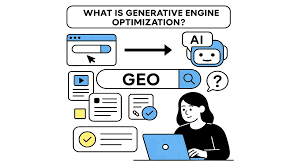
Understand How GEO Helps Content Appear in AI-Generated Summaries
Search is entering a new phase where users no longer rely only on blue links. Instead, AI-generated summaries are becoming a primary way people consume information. These summaries pull insights from multiple sources and present them as concise, conversational answers. In this environment, Generative Engine Optimization, commonly known as GEO, plays a crucial role in helping content become part of AI-generated summaries.
I first noticed the impact of GEO while analyzing why some high-quality articles never appeared in AI summaries, even though they ranked well organically. The issue was not accuracy, but structure, clarity, and contextual completeness. Once the content was adjusted to align with GEO principles, it started appearing in AI responses more consistently. That shift highlighted how GEO is not just an extension of SEO, but a necessary evolution.
This article explains what GEO is, how AI-generated summaries work, and how GEO helps content gain visibility, authority, and relevance in this new search experience.
What Is GEO
GEO stands for Generative Engine Optimization. It focuses on optimizing content so that AI systems can understand, interpret, and summarize it accurately. Unlike traditional SEO, which aims to rank pages, GEO aims to make content usable by AI models that generate answers, summaries, and explanations.
GEO emphasizes clarity, semantic depth, structured information, and contextual relevance. The goal is to ensure that when AI systems look for information to include in summaries, the content stands out as reliable, complete, and easy to process.
How AI-Generated Summaries Work
AI-generated summaries are created by analyzing large amounts of content and extracting key ideas that best answer a user’s query. Instead of showing a single webpage, AI systems combine insights from multiple trusted sources.
To decide which content to use, AI systems evaluate:
-
Clarity of explanations
-
Depth and completeness of information
-
Semantic relevance to the query
-
Logical structure and flow
-
Trust signals and consistency
Content that aligns with these factors is more likely to be included in AI-generated summaries.
Why GEO Matters More Than Traditional SEO Alone
Traditional SEO focuses on keywords, backlinks, and technical optimization. While these factors still matter, they are not enough for AI-generated summaries.
GEO matters because:
-
AI systems prioritize meaning over keywords
-
Content must be easily summarized without losing accuracy
-
Context and relationships between ideas are essential
-
User intent must be clearly satisfied
Without GEO, content may rank but still remain invisible in AI-driven search results.
The Role of Clarity in GEO
Clear Explanations Improve AI Selection
AI-generated summaries depend on content that explains concepts clearly and directly. Ambiguous language or overly complex sentences reduce the chances of content being selected.
Clear explanations allow AI systems to confidently extract and rephrase information without misinterpretation. This improves both accuracy and visibility.
Simple Language Supports Better Summarization
Using simple, natural language makes it easier for AI models to understand and summarize content. This does not mean oversimplifying, but rather avoiding unnecessary jargon and vague statements.
Content written for humans often performs best in GEO because it aligns naturally with how AI systems process language.
Semantic Understanding and GEO
Semantic understanding is at the core of GEO. AI systems analyze not just words, but the relationships between ideas.
Content that includes:
-
Related concepts
-
Supporting explanations
-
Contextual details
-
Natural transitions
provides stronger semantic signals. This helps AI systems recognize the content as authoritative and relevant.
For example, content about “sustainable energy” that also explains renewable sources, environmental impact, and long-term benefits demonstrates deeper semantic understanding than content focused on a single phrase.
Structuring Content for AI Summaries
Use Clear Sections
Content divided into clear sections with descriptive headings is much easier for AI systems to analyze and interpret. Each section should focus on a single idea or question so that the meaning remains clear and organized. This structure also helps users scan the content quickly and find the information they need without confusion.
Answer First, Then Expand
Providing a direct and concise answer at the beginning of each section helps AI systems identify the most important information immediately. Once the main answer is clear, additional context, explanations, or real-world examples can follow to add depth and clarity. This approach benefits both AI understanding and user experience.
Maintain Logical Flow
Ideas should progress logically from basic concepts to more detailed explanations as the content unfolds. A clear and natural flow helps readers understand how ideas connect while allowing AI models to interpret relationships between concepts accurately. Logical structure improves overall comprehension and content quality.
The Importance of Contextual Completeness
AI-generated summaries aim to provide complete answers. Content that only partially addresses a topic is less likely to be included.
Contextual completeness means:
-
Explaining the main idea
-
Addressing related subtopics
-
Anticipating follow-up questions
-
Avoiding semantic gaps
Complete content reduces the risk of misinterpretation and increases trust.
GEO and Trust Signals
AI systems favor content that demonstrates reliability and expertise. Trust signals play a major role in GEO.
These signals include:
-
Consistent and accurate information
-
Clear explanations backed by reasoning
-
Balanced tone without exaggeration
-
Alignment with widely accepted knowledge
Content that feels trustworthy is more likely to be used in AI-generated summaries.
GEO Without Aggressive Optimization
One of the biggest advantages of GEO is that it significantly reduces dependence on aggressive optimization tactics. Rather than focusing on keyword density, frequent technical changes, or constant adjustments, GEO prioritizes meaning, usefulness, and clear explanations that genuinely help users understand a topic.
By focusing on content quality and semantic relevance, GEO allows information to remain valuable even as search algorithms evolve. This makes content more resilient and less vulnerable to sudden ranking fluctuations caused by algorithm updates or over-optimization issues.
This approach is often emphasized by Leading Digital Marketing Companies because it creates sustainable visibility over time. Content optimized for GEO stays relevant longer, aligns naturally with AI-generated summaries, and adapts more effectively to changing AI systems without requiring continuous optimization pressure.
User Intent and GEO Alignment
Understanding user intent is essential for GEO success. AI-generated summaries are designed to satisfy intent quickly and accurately.
Content that aligns with intent:
-
Answers the core question
-
Uses appropriate depth
-
Avoids unnecessary information
-
Maintains focus
Misaligned content, even if well-written, may be excluded from AI summaries.
GEO and Conversational Search
AI-generated summaries are often conversational. GEO-friendly content mirrors this tone by using natural phrasing and logical explanations.
Conversational content helps AI systems generate responses that sound human and helpful. This improves user trust and engagement.
Measuring GEO Effectiveness
While GEO does not rely on traditional rankings alone, several indicators suggest success:
-
Inclusion in AI-generated summaries
-
Improved engagement metrics
-
Increased visibility for long-tail queries
-
Better alignment with conversational search
These signals show that content is being understood and valued by AI systems.
Common GEO Mistakes to Avoid
Some common mistakes limit GEO performance:
-
Overly technical or vague language
-
Lack of structure
-
Incomplete explanations
-
Keyword-focused writing without context
-
Ignoring related concepts
Avoiding these mistakes improves clarity and semantic strength.
The Future of GEO and AI Search
AI-generated summaries will continue to evolve. As AI models become more advanced, they will rely even more on semantic understanding and contextual accuracy.
GEO prepares content for this future by focusing on meaning, structure, and usefulness. Brands that adopt GEO early will benefit from greater visibility and trust.
Conclusion
GEO plays a critical role in helping content appear in AI-generated summaries. By prioritizing clarity, semantic understanding, structured content, and contextual completeness, GEO ensures that AI systems can accurately interpret and summarize information.
In an AI-driven search environment, success is no longer just about ranking pages. It is about becoming a reliable source that AI systems trust and use. GEO makes this possible by aligning content with how AI understands and delivers information.
For businesses and content creators, embracing GEO is not optional. It is essential for long-term visibility, authority, and relevance in the future of search.
Frequently Asked Questions
What is Generative Engine Optimization (GEO)?
Generative Engine Optimization, or GEO, is the practice of optimizing content so AI systems can understand, interpret, and summarize it accurately. Unlike traditional SEO, which focuses on rankings, GEO focuses on clarity, context, and semantic structure, making content suitable for AI-generated summaries and conversational search results.
How is GEO different from traditional SEO?
Traditional SEO aims to rank pages using keywords, backlinks, and technical signals. GEO, on the other hand, focuses on how AI models read and summarize content. It prioritizes meaning, completeness, and logical structure so AI can confidently include the content in generated summaries and responses.
Why do AI-generated summaries need GEO-optimized content?
AI-generated summaries combine information from multiple sources. GEO-optimized content makes it easier for AI systems to extract accurate, clear, and relevant insights. Without GEO, content may rank but still be ignored by AI because it lacks structure or semantic clarity.
How does GEO help content get selected by AI systems?
GEO helps content stand out by providing clear answers, contextual explanations, and logical flow. AI systems prefer content that is easy to interpret, factually consistent, and complete. When content meets these criteria, it is more likely to be selected for AI-generated summaries.
What role does semantic understanding play in GEO?
Semantic understanding allows AI to interpret meaning rather than just words. GEO uses related concepts, natural language, and context to explain topics fully. This helps AI systems understand how ideas connect, improving accuracy and trust when generating summaries.
Can GEO improve visibility without aggressive SEO tactics?
Yes. GEO reduces reliance on aggressive SEO methods like excessive keyword targeting or link building. By focusing on clarity, relevance, and usefulness, content can appear in AI-generated summaries even without heavy traditional optimization.
How should content be structured for GEO?
GEO-friendly content should use clear headings, direct answers, logical sections, and natural language. Each section should focus on one idea, answer it clearly, and then expand with context. This structure helps AI systems extract and summarize information effectively.
Does user intent matter in GEO?
User intent is critical in GEO. AI-generated summaries are designed to quickly satisfy intent. Content that clearly aligns with what users are asking, whether informational or explanatory, is far more likely to be included in AI responses.
What mistakes reduce GEO effectiveness?
Common GEO mistakes include vague explanations, poor structure, incomplete answers, keyword-focused writing, and ignoring related concepts. These issues make it harder for AI systems to understand and trust the content, reducing its chances of appearing in summaries.
Is GEO important for the future of research?
Yes. As AI-driven search continues to grow, GEO will become increasingly important. Search systems will rely more on semantic understanding and less on traditional ranking signals. Content optimized for GEO will be better positioned for long-term visibility and relevance.
